INTERACTIVE SYSTEMS DEVELOPER


OVERVIEW
This is a VR puzzle game where the player takes on the role of an employee who accidentally teleports into a restricted area filled with experimental technology.
Trapped inside a mysterious industrial office facility, the player must solve environmental puzzles, interact with experimental systems, avoid detection, and find a way to escape.
Engine
Unity, C#

Platform
Oculus Quest
Project Type
Team of 4
Primary Role
Gameplay Programming
2 Months
In each room, players are given two choices: solve the puzzle to unlock the next area or use a teleportation device to skip the challenge. However, using teleportation reduces the player’s health, forcing them to carefully manage their remaining health throughout the experience.
Players must also avoid being detected by the facility’s surveillance systems, as getting caught causes additional health loss. Successfully solving puzzles rewards players with health recovery and reveals the code needed to unlock the next room, encouraging strategic decisions between solving puzzles or sacrificing health to progress faster.
The player starts in the first room with a wristwatch that displays their current health and a whiteboard explaining why they are trapped in the facility and what they need to do to escape. The experience consists of four rooms that players must progress through in order to reach the exit room.


MY CONTRIBUTIONS
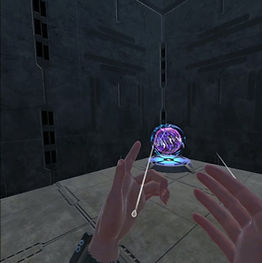
Portal Teleportation Mechanic and Health System
-
Implemented a portal-based teleportation system that transports players between designated locations.
-
Added player transitions between different areas.
-
Connected portal teleportation events to the health reduction system.
Fade Transition System
-
Implemented screen fade-in and fade-out transitions
-
Added smooth visual transitions between gameplay events
Hand Animation System
-
Created VR hand animation controller using Blend Trees
Night Vision Camera System
-
Developed interactive night vision camera mechanics
-
Added hidden clues visible only through the camera view
-
Connected puzzle progression to night vision interactions

First Room
In the first puzzle room, players discover hidden clues written in Morse code on the walls that can only be seen through the night vision camera.
A note inside the room gives the player a hint about using the camera, while another paper helps them understand and decode the Morse code symbols.
After finding and decoding the hidden clues, players can enter the correct code to unlock the next room and continue progressing through the facility.
Second Room
In the second room, players must search the environment for different puzzle pieces and place them into a press machine.
Once all required pieces are inserted correctly, the machine generates an access card needed to unlock the next door.
During the puzzle, the room is monitored by a surveillance camera system, and players must avoid stepping into the camera’s detection zone, indicated by a green light, to prevent losing health.


Third Room
In the third room, players interact with three different computers, each containing a unique puzzle.
Solving one puzzle unlocks access to the next computer, creating a progression-based challenge throughout the room. After completing the final puzzle, players receive the code needed to unlock the exit door and continue toward escaping the facility.
Fourth Room
In the final room, players must avoid being detected by the surveillance system while searching for the keypad. Using the passcode obtained from the previous room, they can unlock the exit door and finally escape the facility.
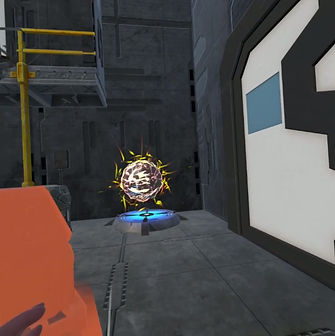
In addition to gameplay development, I also focused on optimizing the game’s performance using the Unity Profiler. This helped identify and resolve performance bottlenecks, resulting in smoother interactions, better frame stability, faster loading times, and a more seamless VR experience for the player.